Tom Evans
The Narrow Road to the Deep NorthTom Evans is Dorrigo Evans’s older brother and, across Dorrigo’s life, a figure whose silences conceal both pain and attachment. A veteran of the Great War, Tom returns from France unable to speak about what he has seen. Years later, he explains that the woman Dorrigo believed he had kissed was Ruth, who had comforted him when memories of the war overwhelmed him. Their son, Frank, was raised by another family and died in a prisoner-of-war camp in Thailand. The late disclosure changes Dorrigo’s understanding of his brother and of a childhood memory he had carried without knowing its meaning.
Identity and Background
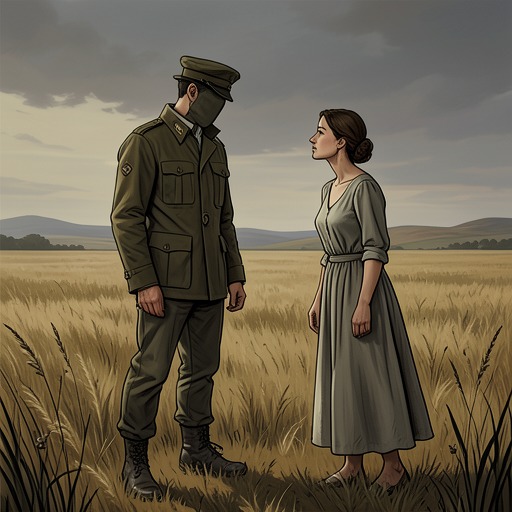
Tom Evans served in the Great War in France. When he returned, he stepped down from the train, threw his kitbag onto the dusty platform, and began to cry. The sight astonished the nine-year-old Dorrigo, who had seen grown men as people who did not weep. Tom said nothing about the war, the Germans, or the gas, tanks, and trenches that had reached the family through reports. That night, as the brothers watched a bonfire on which the Kaiser was burned, Tom remained silent and stared into the flames. His return thus gives Dorrigo an early, enduring image of feeling that cannot be explained by words.
The brothers belonged to a large family whose members were scattered by the search for work during the years before the Depression. Their father died of a heart attack in 1936, and Dorrigo, the youngest of seven, had little contact with most of his older siblings. Tom’s later life was based in Sydney. He had a childless marriage, worked as a labourer in the Redfern railway yards, and, after retiring, tended vegetables in his backyard in Balmain and played darts at his local pub.
The Bush and Dorrigo’s Childhood
In his early twenties, Tom worked as a possum snarer in the country behind Ben Lomond, following a pattern of two weeks at work and one week off. His home was a small cave sheltered beneath a ridgeline, with an overhang that protected a fire. Dorrigo travelled to visit him from Cleveland, leaving the dray at the Fingal Valley turnoff, walking through Llewellyn, and taking his bearings from the snow-covered massif. The cave and the journey to it establish a childhood world distinct from the family home: remote, practical, and organized around Tom’s work in the bush.
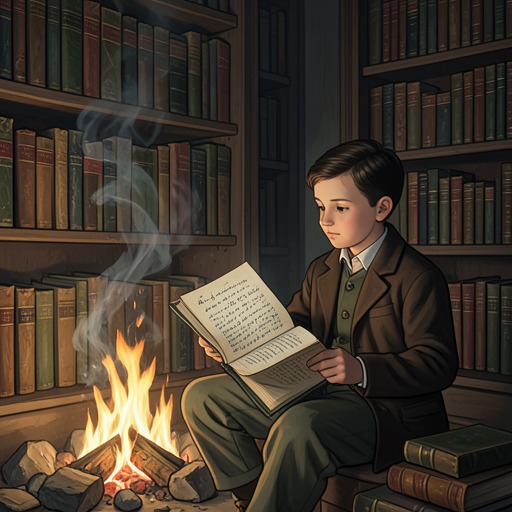
Jackie Maguire sometimes worked with Tom. In the evenings, Tom sang, while Dorrigo read aloud from old copies of the Bulletin and Smith’s Weeklys. Jackie could not read; Tom said that he could. Both enjoyed Aunty Rose’s advice column and bush ballads, and Dorrigo began learning poems from a schoolbook, The English Parnassus, to recite for them. Tennyson’s Ulysses became their favourite. Tom’s role in these visits is not simply that of an older brother receiving a younger one: his work, singing, and shared attention to poetry help make the cave a place of companionship across generations and literacy.
A Memory Reconsidered
Dorrigo once saw Tom with Mrs Jackie Maguire shortly before she disappeared. He interpreted the scene as a kiss and held the memory for years without asking his brother about it. The image later became less frequent in his thoughts and eventually seemed to vanish. Its return, decades afterward, reveals how incomplete observation can harden into an assumed explanation: Dorrigo had seen a closeness between Tom and the woman, but had not known what had brought it about.
During a hospital visit, a conversation about their childhood reading leads Dorrigo to mention Jackie Maguire. Tom identifies Jackie’s wife as Aboriginal, a fact Dorrigo had not known, and the information brings the old scene back to him. When Dorrigo tells Tom what he saw, Tom rejects the interpretation that they were kissing. He recounts returning from shooting rabbits and finding Ruth hanging washing. While helping her, he spoke about his family and then began describing things he had seen in the war. He became unable to speak properly, and Ruth held him. Tom’s account transforms the remembered gesture from a suspected affair into an act of comfort at a moment when his war experience overwhelmed him.
Ruth, Frank, and the Concealed Past
Tom’s explanation opens onto a larger secret. Ruth had a baby, and Tom tells Dorrigo that he was the father. A Gardiner family raised the child and named him Frank. Tom says that the arrangement troubled both Ruth and him, but they did not reclaim the boy because doing so would disrupt the lives of the child, the family raising him, Ruth, Tom, and Jackie. His account presents the separation not as a resolved choice but as a decision the adults believed they had to live with.
After the war, Tom encountered a Hobart man who knew the Gardiner family and learned that Frank had died during the war in one of the prisoner-of-war camps in Thailand. Tom had never met his only son. The news gives his wartime silence and his later revelation a further weight: the lost relationship cannot be repaired by disclosure, and Dorrigo receives the knowledge only after Frank is dead. The revelation also links Tom’s family history to the camps in which Dorrigo himself was imprisoned.
Reconnection and the Hospital Revelation
In later years, Dorrigo and Tom renewed their relationship. They spoke by telephone about once a month, and Dorrigo’s visits to Sydney became an annual midwinter occasion before his growing reputation brought him there more often. Dorrigo found in these meetings a closeness that did not depend on confession or shared interests. Their ease allowed awkwardness to fall away; ordinary conversation could carry a sense of being parts of a larger family bond. This companionship offered Dorrigo some relief from loneliness, even within his own household.
That reconnection becomes the setting for the truth about Ruth and Frank. In February 1967, as Dorrigo was due to fly to Hobart with Ella and the children, he learned that Tom had suffered a heart attack at the Kent Hotel while preparing to throw a bull’s eye. Dorrigo flew to Sydney that evening. Tom was too heavily sedated the next day for a sustained conversation, but on Monday he was able to speak at length. During the visit, Dorrigo’s childhood memory, Tom’s war experience, and Frank’s fate converge in an exchange neither brother had previously undertaken.
The account ends with Tom in the hospital, physically frail but briefly recovering the force Dorrigo had associated with him as a boy. It does not report Tom’s death. Instead, it leaves him facing his brother with the truth of a son he never met. Tom’s story is shaped by the distance between outward silence and inward history: he once returned from war without speaking, later found comfort in Ruth’s embrace, and only near the end of the evidence presented here tells Dorrigo what happened to their child.